
Mental health stigma remains one of the most significant barriers to seeking care and support worldwide. Despite increased awareness and advocacy, misconceptions, cultural norms, and deep-rooted beliefs continue to shape how societies perceive mental illness. Exploring mental health stigma across cultures helps uncover the diverse factors influencing attitudes, treatment, and recovery and paves the way for global understanding and empathy.
Understanding Mental Health Stigma: A Global Perspective
Mental health stigma refers to the negative attitudes, discrimination, and prejudice directed toward individuals experiencing psychological distress or mental illness. This stigma manifests through social exclusion, labeling, and a lack of understanding often preventing people from seeking help.
Globally, the perception of mental illness varies widely. In Western societies, mental health advocacy has gained momentum, encouraging open conversations and destigmatization. However, in many regions of Asia, Africa, and Latin America, discussing mental health remains taboo due to cultural beliefs and limited awareness.
According to the World Health Organization (WHO), nearly two-thirds of people with known mental disorders never seek professional help because of fear of discrimination. This global pattern reveals that stigma is not only a cultural issue but also a public health challenge affecting millions.
Common Cultural Beliefs Influencing Mental Health Stigma
Cultural beliefs play a major role in shaping how communities interpret mental health symptoms. Some common beliefs include:
- Supernatural or spiritual causes: In several Asian, Middle Eastern, and African cultures, mental illness is often attributed to evil spirits, curses, or ancestral punishment.
- Moral weakness or personal failure: In many traditional societies, mental illness is seen as a sign of weakness, laziness, or poor moral character.
- Family reputation and social image: In collectivist cultures, mental illness can bring “shame” to the family, leading to secrecy and denial.
- Fear of social rejection: Individuals may avoid seeking help to prevent being ostracized or discriminated against in employment, marriage, or education.
These cultural narratives deeply affect how mental illness is discussed, diagnosed, and treated, reinforcing cycles of silence and misinformation.
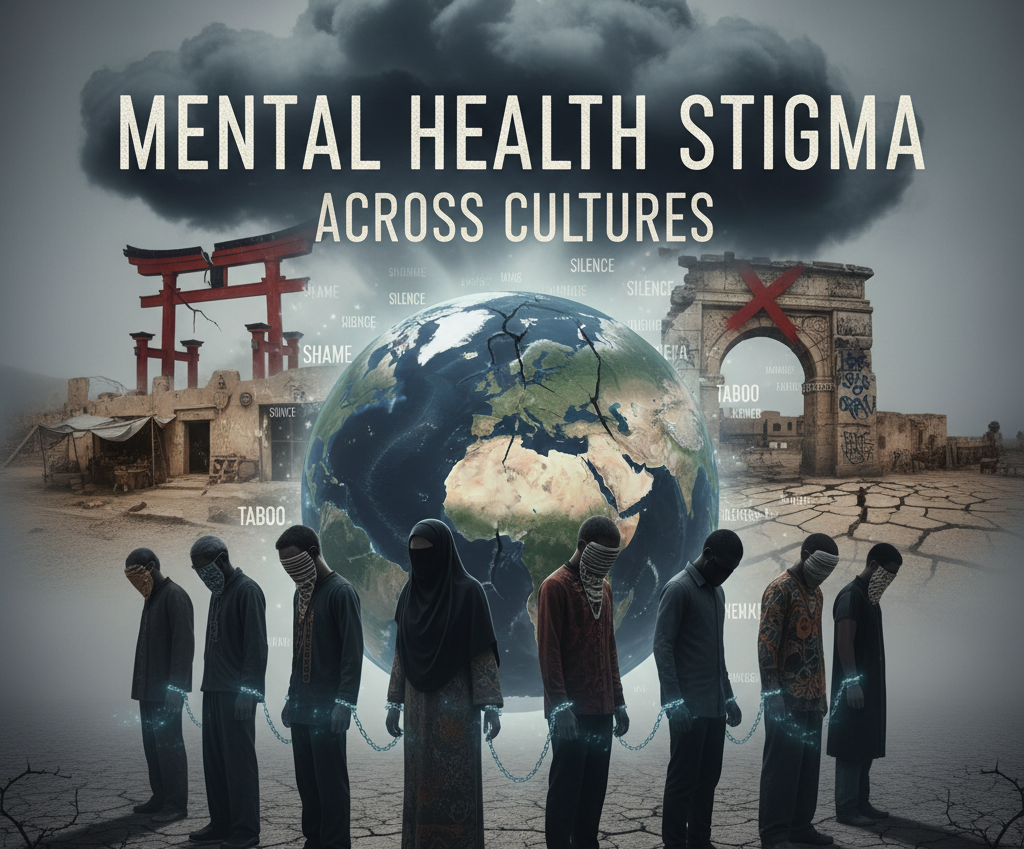
How Stigma Manifests Differently Across Regions
Although stigma exists everywhere, the way it shows itself varies across different regions:
- Asia: In countries like Japan, China, and India, mental illness is often linked to social harmony and family honor. People may avoid acknowledging symptoms to maintain societal expectations.
- Middle East: Stigma can be tied to religious or spiritual interpretations, where mental illness may be seen as divine punishment or a test of faith.
- Africa: Traditional healers often play a central role in addressing mental distress. While this can offer community-based support, it may also delay access to psychiatric care.
- Western nations: Although awareness has improved, subtle stigma still exists through workplace discrimination or negative media portrayals.
Recognizing these regional differences is crucial for developing culturally sensitive mental health initiatives that resonate with each community’s values.
The Role of Religion and Spirituality in Shaping Stigma
Religion and spirituality can both alleviate and reinforce mental health stigma. In many faith-based communities, spiritual leaders play a powerful role in shaping perceptions of illness.
- Positive influence: Spirituality can foster hope, resilience, and a sense of belonging, helping individuals find meaning in their struggles.
- Negative influence: When mental illness is seen solely as a lack of faith or divine punishment, individuals may avoid seeking professional help, relying only on prayer or rituals.
Collaborating with religious leaders and integrating culturally appropriate spiritual care can help bridge the gap between faith and modern mental health treatment.
Impact of Family and Community on Mental Health Perceptions
Family and community play a central role in shaping how individuals perceive and respond to mental health challenges. In many cultures, the family unit is seen as the cornerstone of identity and reputation. As a result, mental illness is not only a personal struggle but also a reflection on the entire family’s honor or social standing.
In collectivist societies such as those in East Asia, Africa, and Latin America family opinions often determine whether someone seeks help. When relatives view mental illness as shameful or disruptive, individuals may suppress symptoms or conceal their diagnosis. Community gossip and judgment can deepen feelings of isolation and fear.
On the other hand, supportive families and close-knit communities can be a source of healing. Families that learn about mental health and foster open conversations act as agents of change, normalizing discussions and motivating people to seek treatment.
Barriers to Mental Health Care Due to Cultural Stigma
Cultural stigma doesn’t only affect attitudes it creates real, measurable barriers to accessing care. Common obstacles include:
- Fear of judgment: People may avoid counseling or psychiatric services due to fear of being labeled “crazy” or weak.
- Lack of culturally competent care: Many healthcare systems fail to provide services that respect cultural beliefs, languages, and traditions.
- Economic and systemic challenges: In low- and middle-income countries, limited mental health infrastructure compounds cultural stigma, leaving few options for treatment.
- Misinformation and distrust: Myths surrounding medication, therapy, or Western psychiatry can prevent individuals from seeking help.
These barriers lead to delayed diagnoses, worsening symptoms, and reduced quality of life. Combating stigma requires both cultural sensitivity and systemic reform from education campaigns to policy-level changes.
Cross-Cultural Approaches to Reducing Mental Health Stigma
Reducing stigma across cultures requires context-specific strategies that blend education, advocacy, and community engagement. Successful approaches often include:
- Community education programs: Grassroots workshops and storytelling initiatives help debunk myths and humanize mental illness.
- Involvement of cultural and religious leaders: Local leaders who endorse mental health discussions can dramatically shift public attitudes.
- Media and representation: Positive portrayals of mental health in films, TV, and social media help change public narratives.
- Youth engagement: Schools and universities that promote emotional literacy cultivate more open-minded future generations.
- Global collaboration: Partnerships between international organizations and local advocates ensure solutions are both effective and culturally relevant.
When global knowledge meets local wisdom, meaningful stigma reduction becomes possible.
Stories of Change: Cultural Shifts and Mental Health Awareness
Across the world, societies are witnessing inspiring transformations in mental health awareness.
- In Japan, public campaigns and celebrity advocacy have encouraged open discussions about depression and anxiety.
- Kenya and other African nations have integrated traditional healers into community mental health programs, bridging the gap between cultural beliefs and modern medicine.
- In Latin America, grassroots movements led by families have reshaped how mental illness is understood emphasizing empathy over judgment.
- Western countries continue to refine workplace policies, encouraging mental wellness and reducing discrimination.
These stories remind us that cultural change is gradual but achievable. When individuals share their experiences and communities listen, the silence surrounding mental illness begins to fade.
FAQ: Mental Health Stigma Across Cultures
What is mental health stigma?

Mental health stigma refers to the negative beliefs, attitudes, and discrimination directed toward individuals experiencing mental health challenges. It frequently results in feelings of shame, social isolation, and hesitation to seek assistance. Stigma can be both social (from others) and internalized (self-stigma), making recovery more difficult.
Why does mental health stigma vary across cultures?

Cultural values, religious beliefs, and social norms all shape how mental illness is understood. In some societies, mental health issues are viewed as spiritual or moral failings, while others see them as medical conditions. These cultural differences influence how openly people discuss mental health and whether they seek professional support.
How does family influence mental health stigma?

In many cultures, the family plays a powerful role in shaping attitudes toward mental illness. Some families fear that a relative’s mental illness might bring “shame” or harm the family’s reputation, leading to secrecy or denial. Conversely, supportive families can reduce stigma by encouraging open dialogue and compassion.
What are the main barriers to mental health care around the world?

Common barriers include:

Fear of judgment or discrimination
Limited access to mental health professionals
Lack of culturally sensitive care
Misconceptions about therapy or medication

These barriers are often intensified by stigma and lack of awareness in many communities.
How does religion affect perceptions of mental health?

Religion and spirituality can both help and hinder mental health awareness. In some cultures, mental illness is viewed as a test of faith or divine punishment, which can discourage treatment-seeking. However, faith-based communities that promote empathy and inclusion can play a key role in reducing stigma.